Saturday, May 12, 2012

Lenny. And weep.

One of the reasons I love living in New York City is because Leonard Bernstein lived right up the block. And right up the block they filmed the location shots for his masterpiece, WEST SIDE STORY. When WEST SIDE STORY opened, most people complained as they left the theatre that none of the songs were "hummable."  What a window into how far ahead of his time the Maestro was, as it is now one of the most recognizable scores in the world.

Listen to his "Tonight":

What might have easily been a pedestrian, conventional love ballad, he underscores with breathless syncopation and our hearts flutter along as these two infatuated youngsters fall in love on a fire escape. The key shifts wildly, keeping us off balance, and each verse ends in an ominous minor key foreshadowing the star-crossed nature of a fleeting romance. It is the musical equivalent of pure joy, with the haunting notion ever present that all of this might not last or end well. Pay special attention to the young Sondheim's lyrics here. They are pitch-perfect for this song, the youth, the vigor, and the sweet, almost inarticulate ways a drop-out gang member and an immigrant dress-maker might describe their indescribable feelings. "With suns and moons all over the place." "Today, the world was just an address, a place for me to live in, no better than all right. But here you are, and what was just a world is a star."

While Bernstein was writing this score, he was simultaneously writing his opera TROUBLE IN TAHITI, a sad story loosely based on the demise of his parents' marriage. 

Think of "Tonight" and all of its breathless promise, now listen to TROUBLE IN TAHITI; Scene 4 (from 0:00 to 2:40):


Achingly beautiful, about an aching subject: A duet sung apart, a couple utterly lost to themselves and to each other. Alone, together. It is a duet of regret, of pointless lies, and running through all of it is an unlikely strain of hope. I think that is what I most admire about Bernstein, that he tenders hope among the hopeless, that he tempers ecstasy with restraint if not sadness. The sweep of this score is monumental, funereal, a requiem of the highest calibre. It is almost inconceivable that Bernstein was capable of such emotional breadth during the same period in his life.

Bernstein was a deeply spiritual man, and drew from his Jewish background and his profound curiosity in Christianity to give us both the CHICHESTER PSALMS and, under commission by Jacqueline Kennedy to open the theatre in her husband's name, his MASS.

Listen to his "Adonai-ro-i:"


Bernstein's gift for melody is all over this piece. Like any good artist, especially any good artist of the late 20th Century, he understood that less is more. This is a simple melodic line rendered lush by the harmonics, and surprising by the occasional flight into the atonal. The harsh staccato section is battled into submission, bathed and washed and cleansed by the return of his stunning and now fully realized melodic line at the end.

And, out of all the transcendent music in MASS, I choose the finale for you:


It is a synthesis of all the themes he has introduced earlier in the score. It builds from the simple song we heard earlier, now sung by a boy, and builds into a canon of glory, of praise, of celebration. Allow yourself to be swept up in Bernstein's gradual rise, let your emotion soar with this score the way it inevitably will if you simply let it wash over you. And feel the enormous peace, perhaps, certainly the peace I feel every time I allow myself the privilege of listening to this.

I've written and often that Leonard Bernstein will be revered by future generations in the way we revere say, Brahms and Mahler and Stravinsky. We don't quite yet. Because he is still mortal to many of us the lucky who lived while he did. But as he passes further into the past, he will pass deeper into our collective psyches. And his music will move us in deeper ways, this man, this genius, who could score the feelings in our hearts, the specific pains and joys, the ordinary and extraordinary, and make us feel things we didn't even know we were capable of feeling. 

I live down the block from where he wrote this music. And sometimes, I have to pinch myself.

Tuesday, May 1, 2012

A salute.


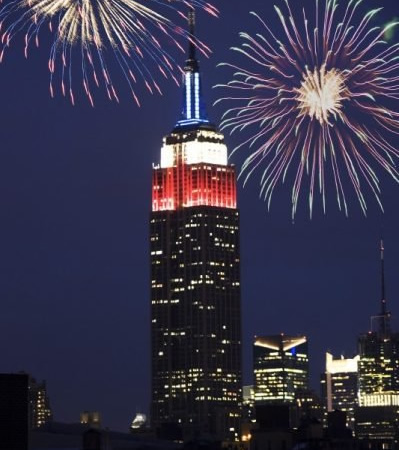
You, who dominated the skyline of the world for forty-three years, you, who are often called the most recognizable building on Earth, you, who took a punch from a plane in 1945, you, you are my champion.

I think of you gracefully tossing your crown downtown as the first World Trade Center went up forty-four years ago. You had worn it well for decades. And it was your time to sit in the shade of another building or two while still holding onto our hearts like a beloved elder-statesman.

When we watched in horror as The Twin Towers came down, perhaps our only consolation was that you, dear friend, were still safely standing up on 34th Street, and ready to bear the weight of our grief and affection, your head lit up proudly and nightly in the festive colors of the seasons, as we crowned you once again with a smaller coronet, no longer King of the World, but King of NYC most certainly, our Kong, and there you stood guarding us like a kind father while we collected our shattered selves and found the courage to reach for the sky once more.

Then yesterday, you did the extraordinary. You tossed your crown back downtown again. Who does that? Who has the humility and wisdom and graciousness to sit back in the shade twice in their lifetime? You do, my hero.

Yesterday, One World Trade Center became the tallest building in NYC, on its way up to becoming the tallest building in the United States of America. It will have its day and many more in the sun. But this week, I think of you, my forever friend, the building that tells me I'm home as it is always you, the first friend I look for whenever I return.

Thank you for carrying us through the darkness with dignity. You are our older King, but beyond that, you are our Emperor. You are the Empire State Building. And no one will ever take that from you.


Sunday, April 15, 2012

In honor of the ship that never came.

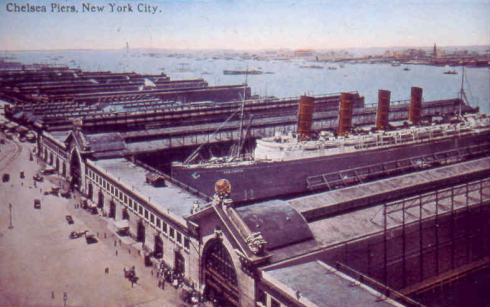
Pier 54 in its heyday, with the RMS Lusitania in port.


All that remains of Pier 54, the iron arch, where New Yorkers once waited to greet the RMS Titanic.


There have been a number of days of great sadness for the people of New York City. But giving a tour yesterday on the 100th Anniversary of the sinking of the Titanic moved me in unexpected ways.

Standing in front of the White Star Offices with my new friends from Washington and California and Kentucky, I could almost taste the desperation of the families storming the building as word trickled in and painfully slowly of those we lost that terrifying night, in the cold, off an iceberg miles from the coast of Newfoundland.

Isidor Strauss, the owner of Macy's Department Store, was found floating lifeless in the frigid waters. His wife, Ida, who had made it on to a lifeboat only to get back on the Titanic when she saw they weren't allowing her husband to go with her, was never seen again. John Jacob Astor IV, the wealthiest man on board, the scion of the oldest monied family in NYC, was also found dead in the water, his face blackened by the coal of one of the famous funnels that had snapped from its tethers and crashed onto those desperately trying to stay afloat. But the great majority of the victims were those third class passengers, the immigrants like our own ancestors, whose hearts were filled with hope of life in a new land where hard work might one day pay off, where their children might one day own a home and have an education. Simple dreams, dashed at sea.

I thought of the people that lined the Hudson River up to the White Star Pier at 14th Street, only to see the SS Carpathia arrive with the small fraction of survivors and a larger hold filled with bodies that did not survive, to be laid out on the floor of the ballroom of the Jane Street Hotel for identification. I thought of the days and weeks of confusion as misinformation gave many false hope, that perhaps the Titanic survived and was being towed to Virginia, a story that gained much traction in the minds of those family members who would do anything to keep their hope afloat.

I thought of the sad fact that there are no more survivors of that terrible, terrifying night alive anymore, those people who lived out their lives with the knowledge that they were somehow lucky beyond lucky, that fate had passed over them for the time being, that their stories would be mangled by newspaper men and The White Star Lines' official version of the events, tainted by a company hoping to avoid prosecution. But this was the end of the fabled White Star story. And the stories of the victims would eventually be heard.

It was also the end of a world as we knew it. The inequities of the class system that caused the disproportionate death of the poor that night would not go unnoticed. It was, perhaps, not a coincidence that this event led to the downfall of the greatest dynasties Europe had ever known, and that we would soon plunge headlong into a War of the World. Systems broke down everywhere, and in many cases, for the better. Most certainly not always, but often. The sinking of the Titanic heralded in a Century of Death and rivers of blood would spill in the hopes of creating a fairer world. Much of that carnage was by design. But it all began with a rather coincidental run-in with a piece of ice that had broken off an ice field eighty miles away on a crystal clear night at the height of man's sense of invulnerability.

We are vulnerable now. We always have been. But it took this titanic event to remind us. And remind us again 100 years later.


Thursday, April 5, 2012

Folks from France to Fresno skate in Rockefeller Center.

And even start their lives together there:


The original plans for Rockefeller Center included as its centerpiece a new Metropolitan Opera House. But after the stock market crash of 1929, those plans were abandoned and The Met would not find a new home until 1966 at its resplendent palace in Lincoln Center.

Left with an open axis that separated the British Empire Building from La Maison Francaise, seasonal gardens were designed, installed, and named for the body of water that separates England from France: The Channel Gardens. At the foot of the gardens was to be a sunken piazza dominated by a major work of art. The Rockefellers commissioned the finest artists throughout the world to adorn what is today, a living, walking, public miracle of a museum of the finest examples of Art Deco Art and Architecture to be found anywhere.

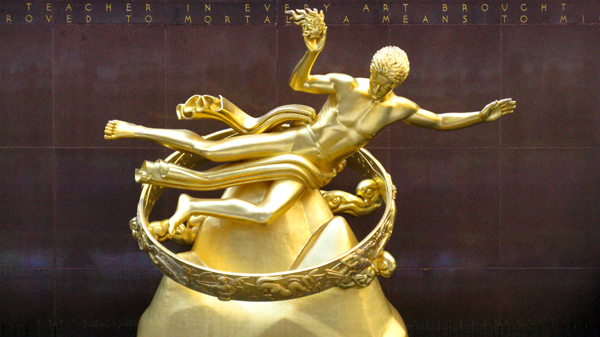
Paul Manship, famous in his own lifetime, would design the Titan and titanic "Prometheus," a gilded bronze masterpiece that would overlook this public plaza. Prometheus seems to float god-like above his ring of zodiac signs and rather closely to the rock that would be sadly be his tethered punishment for giving fire to mortals. The rock echoes with resonance in Rockefeller Center in front of "30 Rock" beneath the Top of the Rock.

Mr. Manship was never that fond of his sculpture, and odd that, as it went on to become the fourth most recognizable sculpture in America after The Statue of Liberty, The Lincoln Memorial, and Mount Rushmore. Prometheus is streamlined and stylized in the hallmark characteristics of Art Deco, and holds aloft in his hand the very flame that would set humankind free to create all that we are capable. Behind him are inscribed the words of the Greek poet and dramatist Aeschylus: Prometheus, teacher in every art, brought the fire that hath proved to mortals a means to mighty ends.

But it would not be until 1936 that all other plans for the plaza in front of Prometheus were scrapped in favor of a bit of inspired loopiness. How about an ice skating rink? It immediately became titanically popular and has gone on to become one of the most beloved attractions in NYC and millions have flocked to the ice to fly through the air like Prometheus who looks down on them, inspiring them to soar in the shadow of his fire on the ice.


Friday, March 30, 2012

The Manahatta Project.


The Manahatta Project

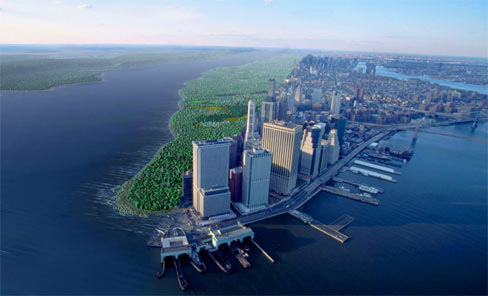
The Manahatta Project (currently under expansion as the Welekia Project) was launched in 2009 in conjunction with the 400th Anniversary of Henry Hudson's historic sail up the river that now bears his name in the rather diminutive but hearty sailing vessel known as the Half Moon.

The Project sought to "re-discover" the Island of Manhattan as Hudson might have encountered it that very first time, a lush verdant hilly landscape, dappled with brooks and ponds, inlets and beaches, cliffs and valleys, and the infamous swamp lands in the middle of the island we now know as Central Park. Anthropological studies were painstakingly researched to determine the vegetation and wildlife of four centuries ago, and after years of data collection, scientific speculation and historical cross-referencing, a map emerged: A map of Manahatta, the Island of Many Hills, the land of the Leni Lenape and Algonquin tribes, part of the Iroquois Nation.

Open the map (it requires Flash Player) and see Manhattan of 2009, the grid of streets and avenues where space seems impossible to find, where buildings abut one another in friendly chaos, where parks are beautiful but designed by the hands of men and carved out of nature, where the bottom half of the island is distinctly "fatter" than it had been after years of nonchalant landfill, broken piers, trash, grounded ships, and, more recently, well thought-out projects like Battery Park City, 90-acres of land added to the southwest corner of Manhattan after the original excavation of the first World Trade Center in 1968.

And underneath this present vision, see the Manahatta of 1609: A very different place, a place where millions upon millions of personal triumphs and tragedies would eventually play out among the diminishing trees and rearranged streams. But this project is not meant to make us weep for the past, but to rearrange our vision of Manhattan in the dawn of a new century.

We are thoroughly committed to our green spaces, and are, for example, in the very midst of a one-million-tree-planting project. We hope to add green spaces to the roofs of almost every building in Manhattan, and as we add bike lanes and widen esplanades, with fewer people in automobiles, we fully expect our city to look much more green again. A canopy of green under which will lie the city that we all love. The best of both maps.

I found this site fascinating and I hope you will as well, with all my best wishes.

Thursday, March 29, 2012

Rat Rock!


Looming over the kid-tastic Hecksher Playground at the southern end of Central Park is a rat-tacular hunk of Manhattan schist, a huge hunk of schist in fact, called Rat Rock. Kids enjoying the playground climb its heights and marvel at the mica shining in the sunlight in between slides and swings and seesaws and the very famous and fierce kick ball games for which the playground is best known. Hecksher Playground is the oldest (1927) and largest (three acres) playground in Central Park and just underwent a multi-million dollar renovation to make the fun even funner and the safety even safer. But if you want to put safety on a shelf for a moment, put on a good pair of sneakers and sneak up the side of the schist and you'll see the gouges of a glacier that scraped gravel along the granite during the last Ice Age, ice that once was a mile thick on top of your sunny head.

Does it look like a large rat to you?

Monday, March 26, 2012

Winston Churchill Square


Winston Churchill is an American! An honorary one, but the first of three people ever to be made honorary citizens of the United States. He actually was half-American. In a page from Downton Abbey, his father was the Lord Churchill of the Dukes of Marlborough. But his mother was the Brooklyn-ite Jenny Jerome. Jerome Avenue is named for her father. So, we honor Winston Spencer Churchill here in NYC, in Greenwich Village, in a tiny quiet little grove on Bleecker Street (it sits on Downing Street proper, but most people access it from Bleecker) that is a scant .05 acres of shady paradise.

Churchill had a contentious but hysterical relationship with NYC society. His wit was often aimed at them, if not elsewhere. Here are some of my favorite barbs and delicious bites:

Bessie Braddock: “Sir, you are drunk.” 
Churchill: “Madam, you are ugly. In the morning, I shall be sober.”

Nancy Astor: “Sir, if you were my husband, I would give you poison.”
Churchill: “If I were your husband I would take it.”

A lie gets halfway around the world before the truth has a chance to get its pants on.

Once in a while you will stumble upon the truth but most of us manage to pick ourselves up and hurry along as if nothing had happened.

If you are going to go through hell, keep going.

It is a good thing for an uneducated man to read books of quotations.

You have enemies? Good. That means you’ve stood up for something, sometime in your life.

You can always count on Americans to do the right thing—after they’ve tried everything else.

History will be kind to me for I intend to write it.

The farther backward you can look, the farther forward you are likely to see.

A sheep in sheep’s clothing. (On Clement Atlee)

A modest man, who has much to be modest about. (On Clement Atlee)

I am ready to meet my Maker. Whether my Maker is prepared for the ordeal of meeting me is another matter.

A pessimist sees the difficulty in every opportunity; an optimist sees the opportunity in every difficulty.

To improve is to change; to be perfect is to change often.

Solitary trees, if they grow at all, grow strong.

Success consists of going from failure to failure without loss of enthusiasm.

The best argument against democracy is a five-minute conversation with the average voter.

Everyone has his day and some days last longer than others.

The whole history of the world is summed up in the fact that, when nations are strong, they are not always just, and when they wish to be just, they are no longer strong.

If Hitler invaded hell I would make at least a favorable reference to the devil in the House of Commons.


Saturday, March 24, 2012

Washington Square Park


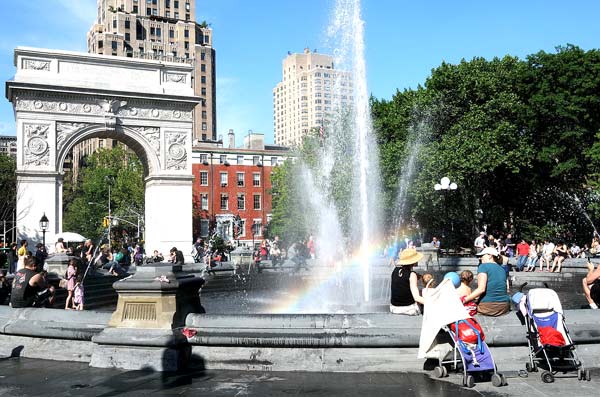
My thoughts today return to Washington Square Park, home of the triumphal arch commemorating the 100th Anniversary of Washington's Inauguration and designed by Stanford White. To think of the things that happened in this square is to think of the history of this city, and this nation, and in a real sense, of the world in the last two hundred years. Today it sits at the heart of the largest private university in the US, New York University. But think back to the wealthy and elegant families of the 19th Century that lived in that line of town-homes on the northern shore, think of Henry James chronicling their bondage to society in his crushing novel, Washington Square. Think of the Triangle Shirtwaist Company fire in 1911 that brought the city to it's knees in a grief we wouldn't experience again until September 11th, 2001. Look for the "hanging tree" and imagine the last thought of those who swung from it's menacing branch. Then think of happier times, of the glorious music that filled the fountain in the fifties and sixties, the folk explosion that informed a generation of not only musicians but poets and painters and politicos. Look around you at the new lamps and the new flower beds, the new pathways and dog runs, the breath of new life in a park that needed some weeding. On a very personal note, I miss my theatre there, the magnificent Manhattan Theatre Source that brought me to Washington Square more often than I would have gone. Now I'll have to make that special effort to get there unmotivated, except by the centuries of memories that whisper through it's trees and the promise of new memories to come.


Friday, March 23, 2012

Subway connections.


Sometimes, when you take the subway, in the middle of a mass of humanity, you can oddly feel a little lonely, particularly on a day when you've dropped off fifty new friends at the airport and they are no longer following behind you except in the pretty pictures in your mind's eye and the lovely song you can still hear in your mind's ear.

Most people on the NYC subway have found a way to disconnect form the throng, to look inward and take a little break from visual and aural invasion of the madding crowd. The good people at Apple have brought us the iSubway, where everyone is connected to their favorite music or tricky games or, if you're above ground in Queens, your gossip-y friend. But I dispensed with all of that and my crossword puzzles last year to look people in the eyes.

To connect.

And it works! Look across the aisle and smile and more often than not, someone will smile back. It is amazing to be reminded that we are human and people respond in kind. Toddlers are the best. Every one in the world is a potential new best friend to them, and although the consistency of the universe is a little beyond their comprehension and you will disappear from their memories the moment they leave the train, they will make any number of faces at you as long as you make faces back.

We should never forget our toddler heart.

One day, on the A train, a group of very rowdy youths got on board at 14th Street. They were pushing one another, their soft drinks flying, laughing and loud. Very, very loud. Then one of them, unusually tall and thin, touched the overhead bar, rose up en pointe, and effortlessly raised his other leg into an arabesque. The poetry of his movement, this moment, moved me to my core. A random act of artistry, and I was so happy to live in New York, on a subway, like today, where beauty can break out like springtime.

Thursday, March 22, 2012

My shining friends.


Should I ever become weary of my world, should I forget that a special brand of magic awaits me each morning on these streets at my feet, should I fail to look up at this shining night the way they'll tell you not to in NYC, I'll remember you, my new friends, from Arkansas, from Texas. When I see my city through your wonder-filled wonderful eyes, I'm reminded how much my home means to me, and that it is truly only made special by the people, people like you, indeed, specifically you, who teach me more than I could ever teach you.

To Clarksville, a special thank you for your music all week. I must admit to being head-over-heels in love with talent. So, you've won my heart. I am a shadow in your starlight. In return, a song for all of you. Come back and sing it to me one day:


Tuesday, March 20, 2012

Splendor in the grass.


Out of a Tim Burton film, the parabola of a lawn on the Lincoln Center campus is getting ready for another season of thousands of visitors who will climb its curvy verdant sweep to escape the city by one story and take in the sunshine surrounded by the Travertine of Tuscany. Designed by Elizabeth Diller, of the architecture firm, Diller Scofidio & Renfro, the lawn is part of a series of largely subtle changes, pleasing updates, all-around user-friendliness to what had sometimes been described as a bleak, stark urban project. Lincoln Center has a little more life now, a lot more light, and the craziest patch of green that catches your eye and lures you up into its lush life to frolic on a mat of nature in the air. See you up there!

Sunday, March 18, 2012

Junior's Restaurant: Ah, the cheesecake!

Since Jill asked...

There has been a diner on the corner of DeKalb and Flatbush in Brooklyn since 1929. In 1950, owner, Harry Rosen, founded his new restaurant and named it for his sons, Walter and Marvin. Junior's was born. Although a little bit of everything was on the menu, it was the cheesecake that grabbed everyone's gustatory attention. The recipe had been in the Rosen Family for three generations and it well deserves it's nickname, "The World's Most Fabulous Cheesecake."

A fire nearly destroyed Junior's in 1981, and distraught Brooklynites gathered at the catastrophe screaming, "Save the cheesecake! Save the cheesecake!" They couldn't, sadly. But they saved the recipe, and today, Junior's Cheesecake can still be bought at the original location, in Grand Central Terminal, off Times Square, and in the lobby of the MGM Grand in Las Vegas.

And, you can buy it right here, on-line (their new Carrot Cheesecake is Jeff's favorite):

http://www.juniorscheesecake.com/juniors_cheesecake/Juniors_Cheesecake_Home/Our_Collections.php


Breanne's Pick at The Met:

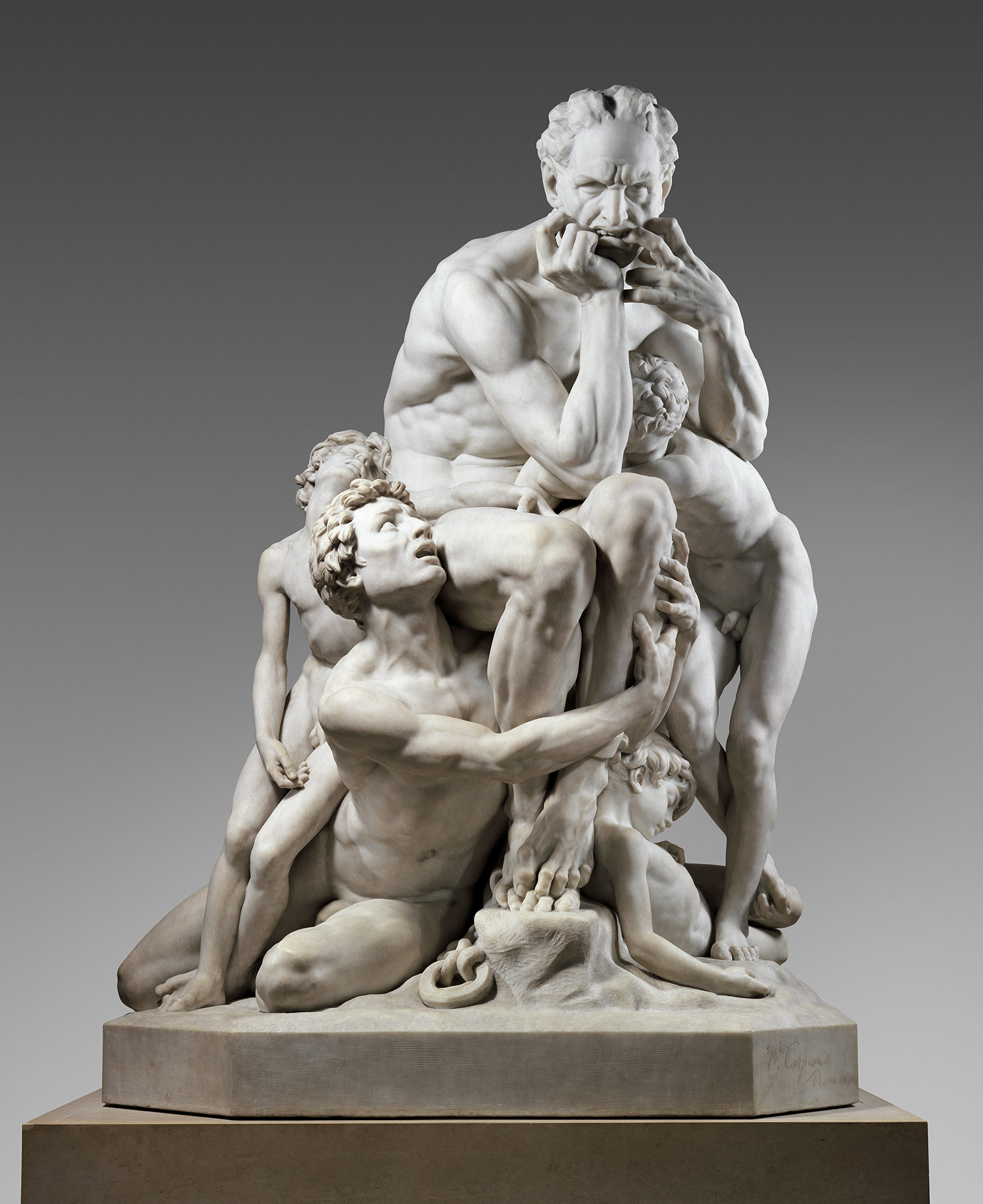
Ugolino and His Sons, modeled ca. 1860–61, executed in marble 1865–67
Jean-Baptiste Carpeaux (French, 1827–1875)
Saint-Béat marble

Ugolino, a traitor to Pisa, was banished to die of starvation with his sons and grandsons. In this haunting, dramatic, gut-wrenching sculpture by Jean-Baptiste Carpeaux, we see the torment in the father's face and features as his sons plead for him to eat them. Perhaps most disturbing, Ugolino seems to be considering it, so painful is his predicament.

Michaelangelo is all over this piece, as Carpeaux was a great student of the genius' work. Notice the perfect anatomy, the muscles, veins, sinews, all contracting in agony. Notice, too the oversized hands and feet, decidedly and purposely out of proportion as vessels of emotion.

To learn more of Ugolino, read Dante's Inferno.

To learn more about this sculpture, visit The Met's extraordinary website:

http://www.metmuseum.org/toah/works-of-art/67.250


Saturday, March 17, 2012

A very old tradition.


The first NYC St. Patrick's Day parade was held March 17th, 1762, fourteen years before the signing of the Declaration of Independence.


It was held on lower Broadway in 1762 by a band of homesick Irish ex-patriots and Irish military serving with the British Army stationed in the American colonies in New York City. This was a time when the wearing of green was a sign of Irish pride and was banned in Ireland. The parade participants reveled in the freedom to speak Irish, wear the green, sing Irish songs and play the pipes to Irish tunes that were very meaningful to the Irish immigrants who had fled their homeland.

For the first few years of its existence, the parade was organized by military units. After the war of 1812, the Irish fraternal and beneficial societies took over the duties of hosting and sponsoring the event. Originally, the Irish societies joined together at their respective meeting places and moved in a procession toward Old St. Patrick's Cathedral in Lower Manhattan on Mott & Prince Streets where the Archbishop of New York would address the crowd before revelers dispersed to celebrate.

Around 1851 the individual societies merged under a single grand marshal and the size of the parade grew sharply. This was when the "Irish" 69th Regiment began to lead the marchers and the Ancient Order of Hibernians became the official sponsor. In the early 90's, the Parade was attacked for its traditional values and in the resulting law suites the organizers rights were up held all the way to the US Supreme court. These attacks continue today. In 1992 the National AOH directed all AOH organizations to form separate corporations to run events such as the Parade. The Parade is run today by members of the AOH under a separate corporation, St Patrick’s Day Parade Inc.

It is considered the largest parade in the world.

Thursday, March 15, 2012

New Tork City gone wrong. (As my typo is thematic, I'm keeping it.)


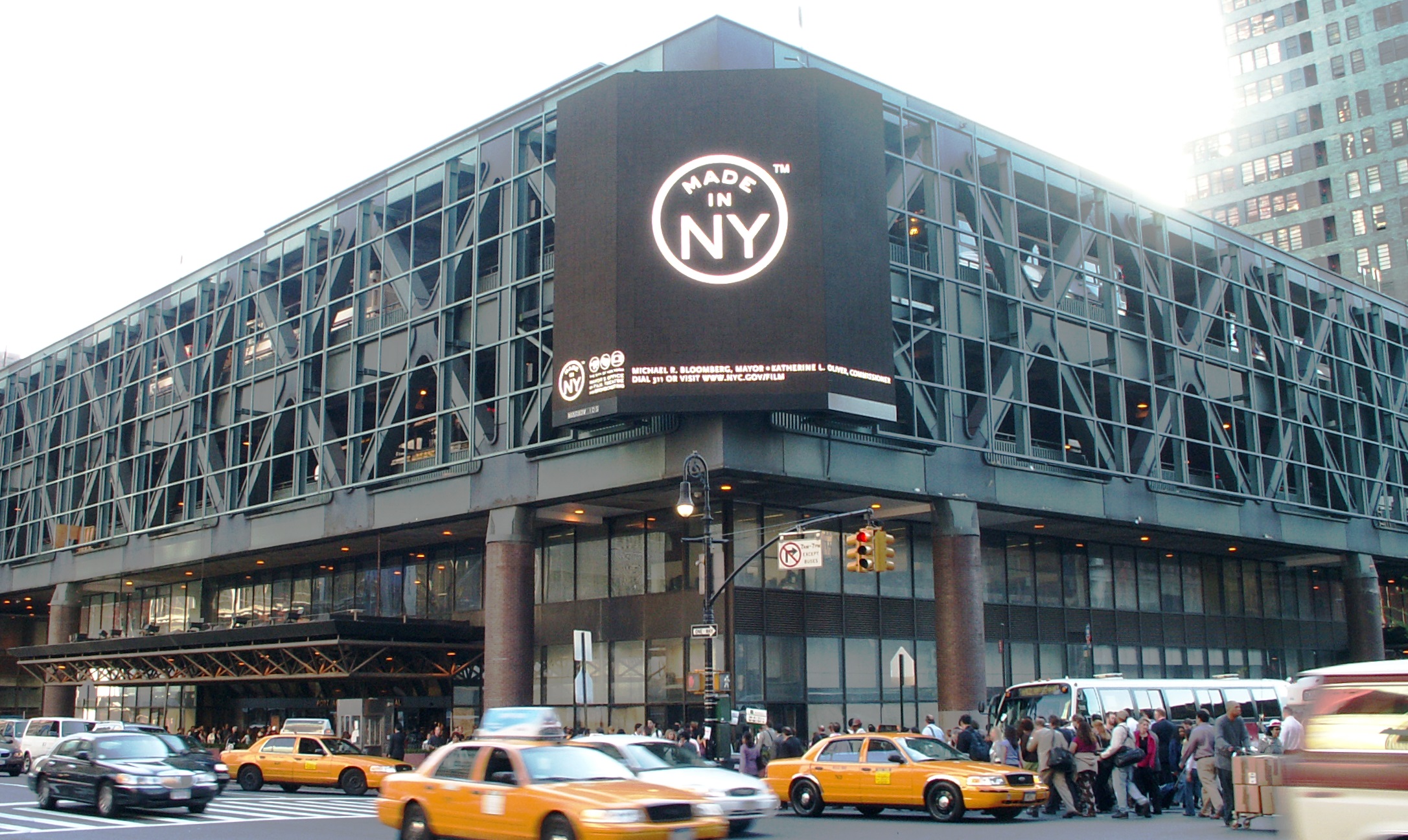
Granted, how do you make a bus terminal look cool, but this is an epic fail. After decades of repurposing and redesigning, we are still left with this eyesore on 42nd Street. The use of windows on the first two floors may have been '70s chic, but they are terminally filthy with 5,000 buses driving on top of them every day. Every time I pass it, which is every day, I think, "Wow, it looks like a crane fell on top of an ugly mall."


Let me add here, it replaces this,
which is about as exciting as a shoebox. They've never been able to get this building quite right, have they?

Wednesday, March 14, 2012

New York City gone wrong.


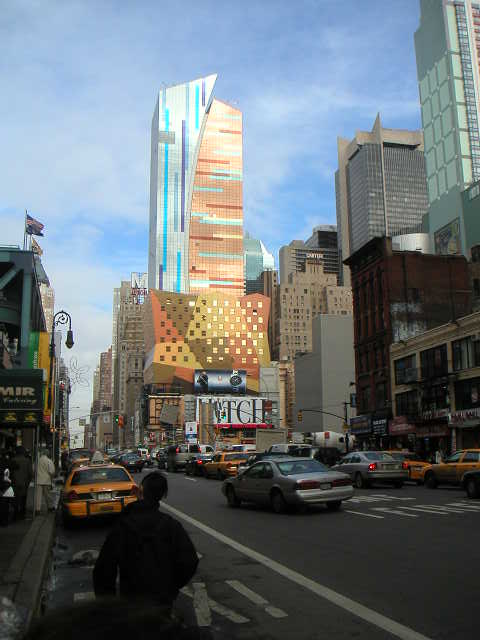
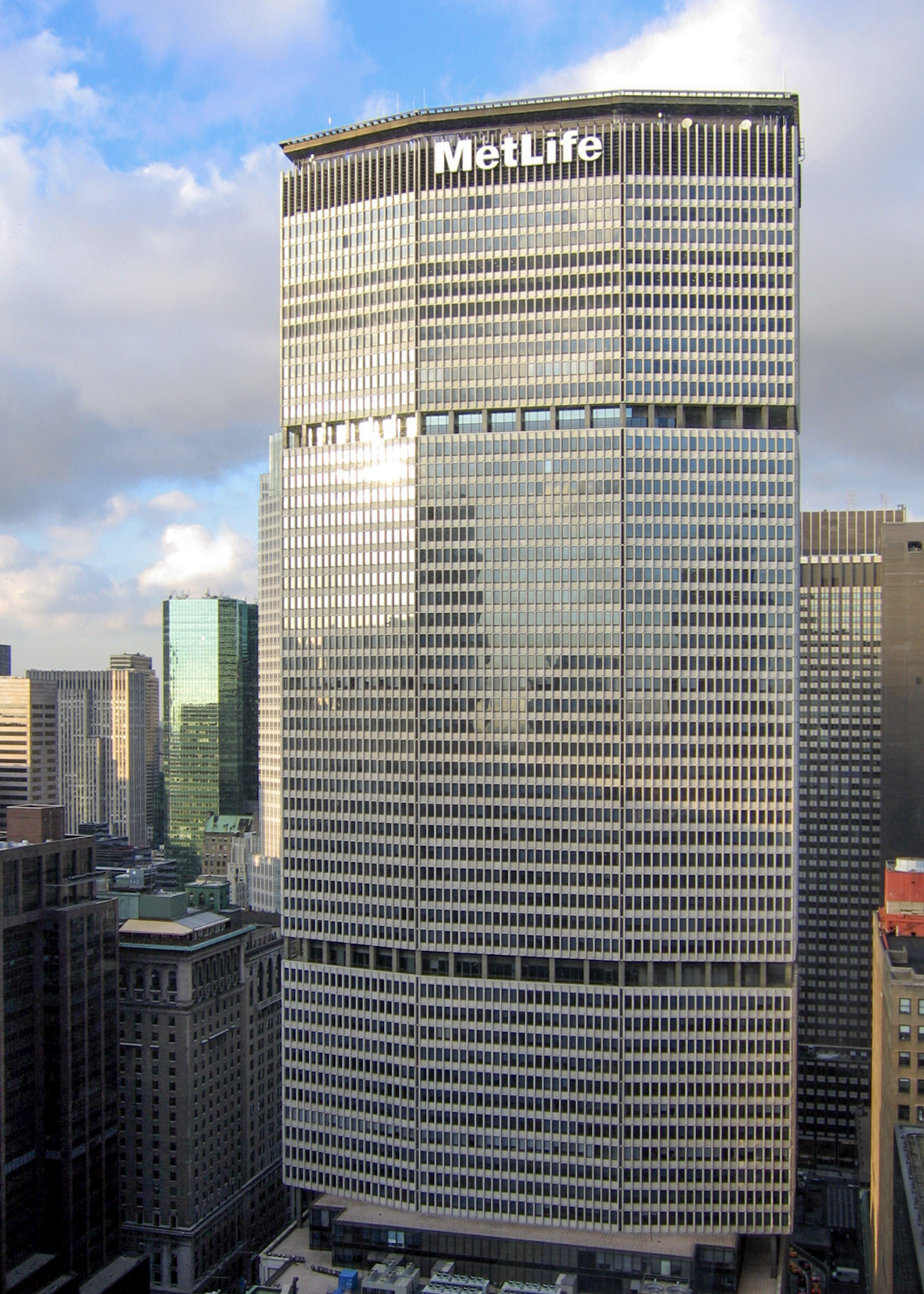
This building is quite simply awful. It would be laughed out of Las Vegas where the bar for architecture is, if not low, rather flexible. It's polytetrahedral base is utterly confusing, it's mis-matched asymmetrical tower is faced with a mile of glass in ugly glazes, and the whole thing is bisected by an arc of light that reminds me of a fuse, as if this mess were about to blow itself up out of embarrassment. Out of all the stunning architecture in NYC, THIS behemoth to bad taste is the view from my apartment. Ugh.

New York City gone wrong.


Polled in 1987, this building has the distinction of being the structure the majority of New Yorkers wanted demolished in their hometown. It is overbearing, with unpleasing planes and bared concrete, taking the worst pages from the often interesting Bauhaus School of Design and massing them into what was once the largest commercial office building in the world. As such, it blocks THREE NYC jewels: Grand Central Terminal, The Helmsley Building, and the sweeping view of Park Avenue. And I have to walk around the entire thing just to get home sometimes. Ergh!

Liberty enlightens me again.


My first visit to the Statue of Liberty in 2012 today, the four hundred and thirty-fourth in my life, and I looked up at her, somewhere close to her south-west corner, and the sweep of her arm down to the curve of her dragging leg, the movement of her gown, her copper a striking sea foam green against a particularly azure sky, and I felt as if I were seeing it all for the very first time. It is a wondrous thing.

Sunday, March 11, 2012

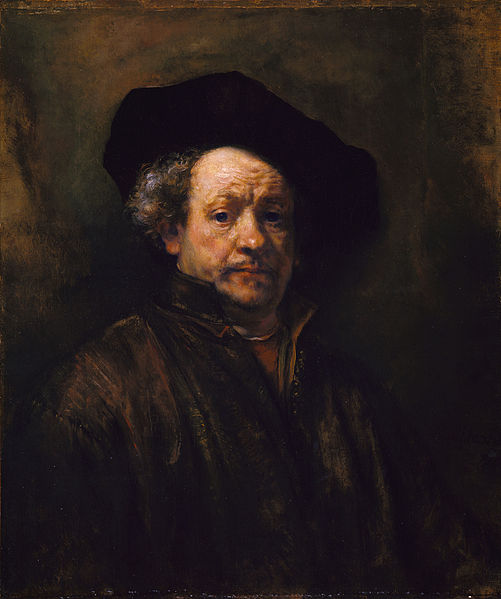
Jeff's Met Picks: Rembrandt

Self-portrait
Rembrandt (Rembrandt van Rijn)  (Dutch, Leiden 1606–1669 Amsterdam)


The only museum in the world to house more Rembrandt paintings than The Met is the Museum het Rembrandthuis (or "Rembrandt House") in Amsterdam. This man took the medium of oils to new heights, and new depths, if you will, as his masterly application of hundreds of layers of glazes gave his work remarkable and unsurpassed dimension. His lavishly rich golden-toned works seem to radiate light from within. Rembrandt van Rijn painted himself many times over the course of his life. This is one of his last self-portraits and his honest, unforgiving eye portrays himself warts and all. I am always particularly struck by the wisdom emanating from his well-worn face, and a knowing sense of his psychology in an age that predates the formal science of psychology by some 200-plus years.

Saturday, March 10, 2012

Jeff's Met Picks: van Gogh

Cypresses
Vincent van Gogh  (Dutch, Zundert 1853–1890 Auvers-sur-Oise)
van Gogh called cypress trees "Nature's perfect architecture." If you walk north through Central Park to The Met, you pass a grove of them on Cypress Hill. It is an especially fun thing to do if you are taking in the number of canvases of cypresses by van Gogh hanging in the museum. van Gogh's paintings are three-dimensional as he slathers on the paint with such abandon, the wide and wild paint strokes have an actual depth. Paintings in relief. The colors range from brilliant to putrid and the painting is at once a peaceful view of hilly countryside and a manic ride through the mind of one of the world's most celebrated artists, the man who sold one work out of his 2,100 in his lifetime, works that now sell regularly for 50 to 100 million dollars.

I wonder that van Gogh wasn't so much troubled as he was lonely. He may have had a social adjustment problem that today we would place on an autism continuum. He suffered from vertigo and inner ear infections, and as such, owns a piece of my heart. He cut off his ear out of pain, not out of love. He's been described as bipolar, epileptic, alcoholic (especially fond of absinthe), porphyric, and schizophrenic. And the end of his life is not often told correctly. A group of local youths in Auvers-sur-Oise taunted van Gogh for weeks, pretending to be his friend. It is very likely they lured him to a garden one day and shot him. He stumbled blocks to his room where he told the manager he had shot himself, despite no gun ever being found. He never told on the boys. He thought they were his friends.


His last words were: The sadness will last forever.


I remember all of that when I see this painting. A man longing for connection, giving life to the inanimate around him. And I do not find the painting sad or the product of a tortured mind. I find it joyful and telling from a man capable of ecstatic highs who paid our price with inconsolable lows.